OptiGrid aims to improve industrial battery returns by at least 10%
Posted January 30, 2026
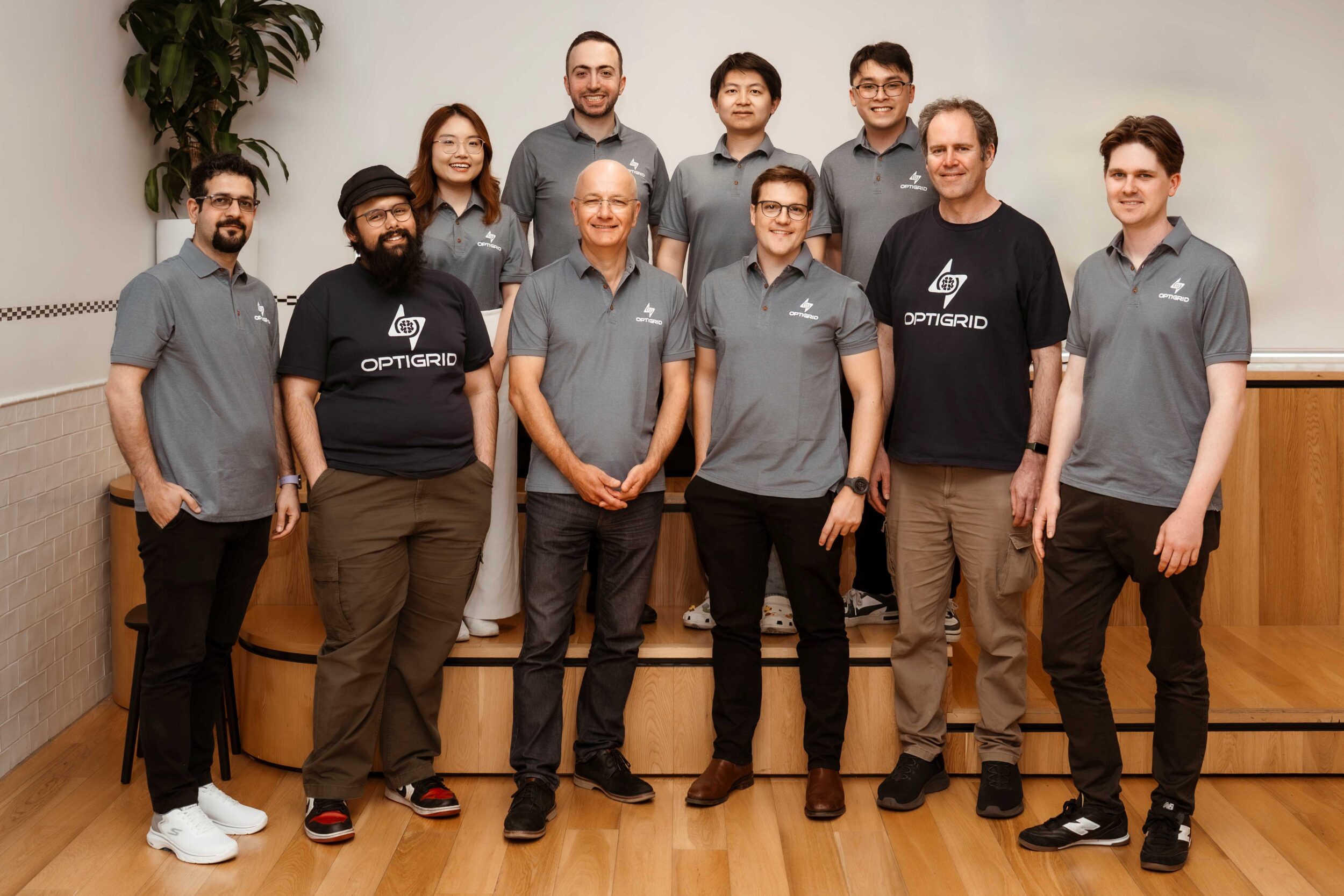
South Australia is unique in the world, with more than 70% of our power generated by renewable energy, targeting 100% net renewable electricity generation by 2027. There are even times when SA’s rooftop solar generation exceeds the entire state’s electricity demand.
This makes the state the perfect place for developing technology to scale renewable energy production and optimise it’s use.
OptiGrid, a company founded to commercialise research from the University of Adelaide (now Adelaide University) is doing just that.
OptiGrid’s mission to solve renewable power problems
When a power systems engineer and an electrical engineer have a set of algorithms on their laptops that meet an industry need, the decision to commercialise the research is a critical turning point.
In Q2 2024, Dr Ali Pourmausavi, Nam Dinh and Sahand Karimi decided to do just that, combining machine learning models that predict wholesale electricity prices with battery optimisation and electricity trading models to create OptiGrid’s services.
“If we don’t commercialise this research, probably noone else will. It’s not just about doing the research, it’s about using it and having an impact – and we wanted to do that desperately.” – Sahand Karimi, OptiGrid co-founder
Smoothing fluctuating energy prices ultimately reduces consumer electricity prices
Australia has a wholesale electricity market, and the high percentage of renewable energy supplying the grid makes wholesale prices incredibly volatile.
Changes in renewable electricity generation can mean a significant difference in the state of the grid. Electricity prices can go from zero to $10,000 based on changes of supply. This is why battery storage is critical to eliminate reliance on fossil fuels and gas. Industrial batteries can store electricity to release when renewable supply stops, so that supply and demand are always equal.
OptiGrid combines electricity price predictions with battery optimisation and trading models to increase revenue for the large batteries that supply the grid by more than 20%.
In 2016, South Australia experienced three major blackouts, including a state-wide power outage in September. In March, Elon Musk claimed that he could solve the SA’s power woes with 100MW of storage via the Tesla batteries, delivering in 60 days. This catalysed the creation of Neoen’s (another Lot Fourteen company)150 megawatt Hornsdale Power Station, better known as the ‘Big Battery’.
Volatility in the power grid motivates investment in batteries, but once built, the battery systems suppress volatility in the grid, improving efficiency and reducing electricity prices for consumers.
Using digital batteries prove the technology to build trust with battery investors
Industrial batteries that supply the power grid are typically financed by private investors and banks, so demonstrating return on investment is key. OptiGrid’s aim is to show that their system can improve returns by at least 10%.
Developing algorithms through research is just the first step – these algorithms need to be tested and proven. Rather than risking expensive physical assets or doing simulations that may not be close to reality, OptiGrid chose to create digital batteries that model the characteristics of a real-world battery.
The digital battery is built in the cloud, with the specific characteristics of its real-life counterpart, including the manufacturer’s specifications, the inverter characteristics, grid connection details, discharge and charge efficiency and parasitic load (the energy the battery consumes at rest). Each of these characteristics has a material impact on the operation and financial outcomes of the battery.
This enables customers, from energy retailers and traders to high energy users like data centres or agriculture using large batteries, to test different battery sizes, types or energy trading strategies on digital batteries to see the potential gains before applying the optimisation in real-life.
Providing this level of transparency to a conservative industry has enabled OptiGrid to build confidence with customers.
Successful research commercialisation requires an understanding of the customer problem
Karimi’s advice to researchers looking to commercialise their IP in 2026 is to fall in love with the problem, not just the solution. As a researcher, he observes that there’s the potential to be swept up with the machine learning model or technology and neglecting to engage with the real-world outcomes it could drive.
“There are so many problems that AI and machine learning can help solve in many industries, including energy, space and defence.
“Find the problem, understand the customer or stakeholders deeply and apply machine learning developed over years to solve the problem.”
Great things come to those who subscribe
Subscribe
"*" indicates required fields
Adelaide 5000
Developed by Frame Creative
© Lot Fourteen All Rights Reserved